• Change country/language

    Looks like you’re in {} — you’re on the {} site.

    Cancel

    Country and language selected

    You are being redirected to the {} site. Products and services availability vary by country. Do you wish to continue?

    Continue
    Cancel

Sports Medicine Imaging

Achieve improved image quality and efficiency with advanced MR technology

At a glance

MRI’s role in imaging

MR plays an important role in returning athletes to the field

Concussion & mTBI imaging

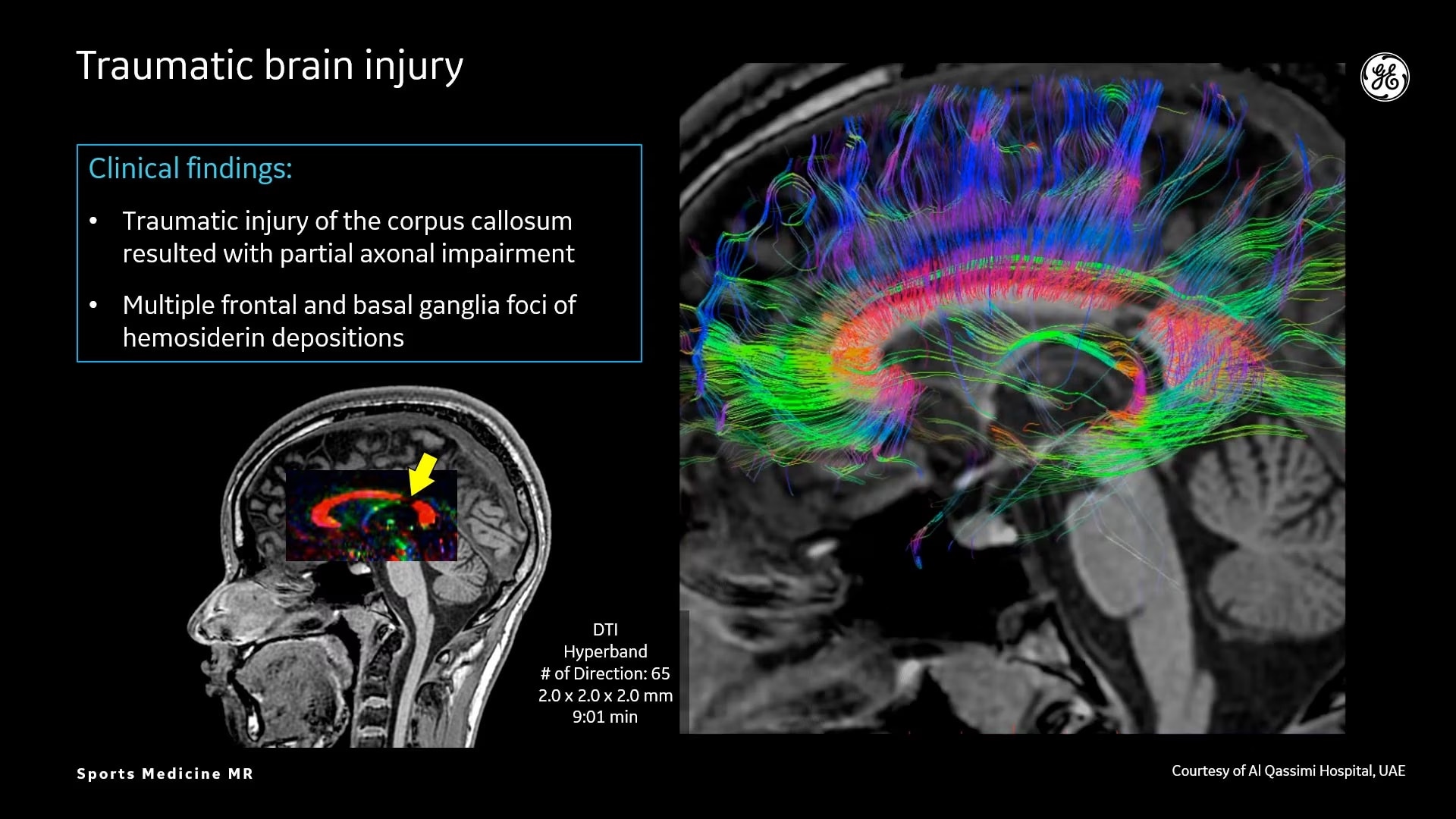
Advanced quantitative MR imaging can detect structural and functional neurological changes

MSK injury imaging

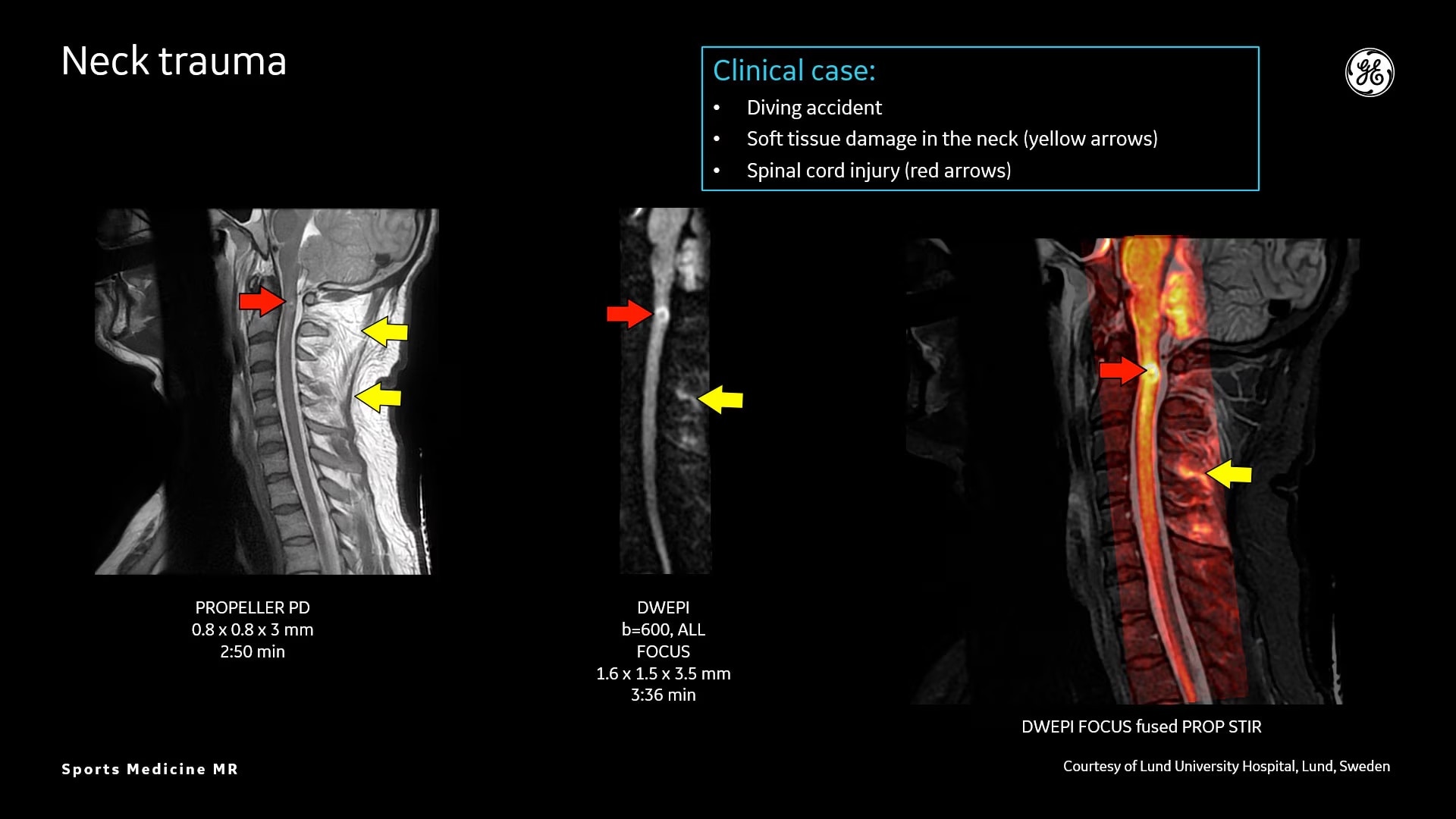
MR technology can scan both soft-tissue and bone injuries, all perfectly co-registered

Diagnostic confidence

Discover deep-learning-based MR image reconstruction for sharper, clearer & accurate images
Sports Medicine: leverage advanced MRI technology toward more objective biomarkers of MSK injury, concussions and recovery

MR imaging can help determine an athlete’s level of recovery and fitness to allow for a return to play after various sports injuries. Sports Medicine Imaging MR technology helps with diagnosis, informs treatment decisions, and may help predict an athlete’s expected course of recovery, outcome and return to play.
sports-medicine-mri-ph-en

"When we do scan professional athletes, we then take what we’ve learned and bring that into the general population".

Steve Sweriduk, MD
Shields Health, MA
Help identify specific treatment modalities
Leverage GE Healthcare MR technology to accelerate the science of sport-related concussion, MSK injury and return to play. MR technology can help identify specific treatment modalities for individual patients or athletes and can predict an individual athlete’s likely course of recovery and return to play.
Determine Return to Play
Diagnosis and prediction for return to play
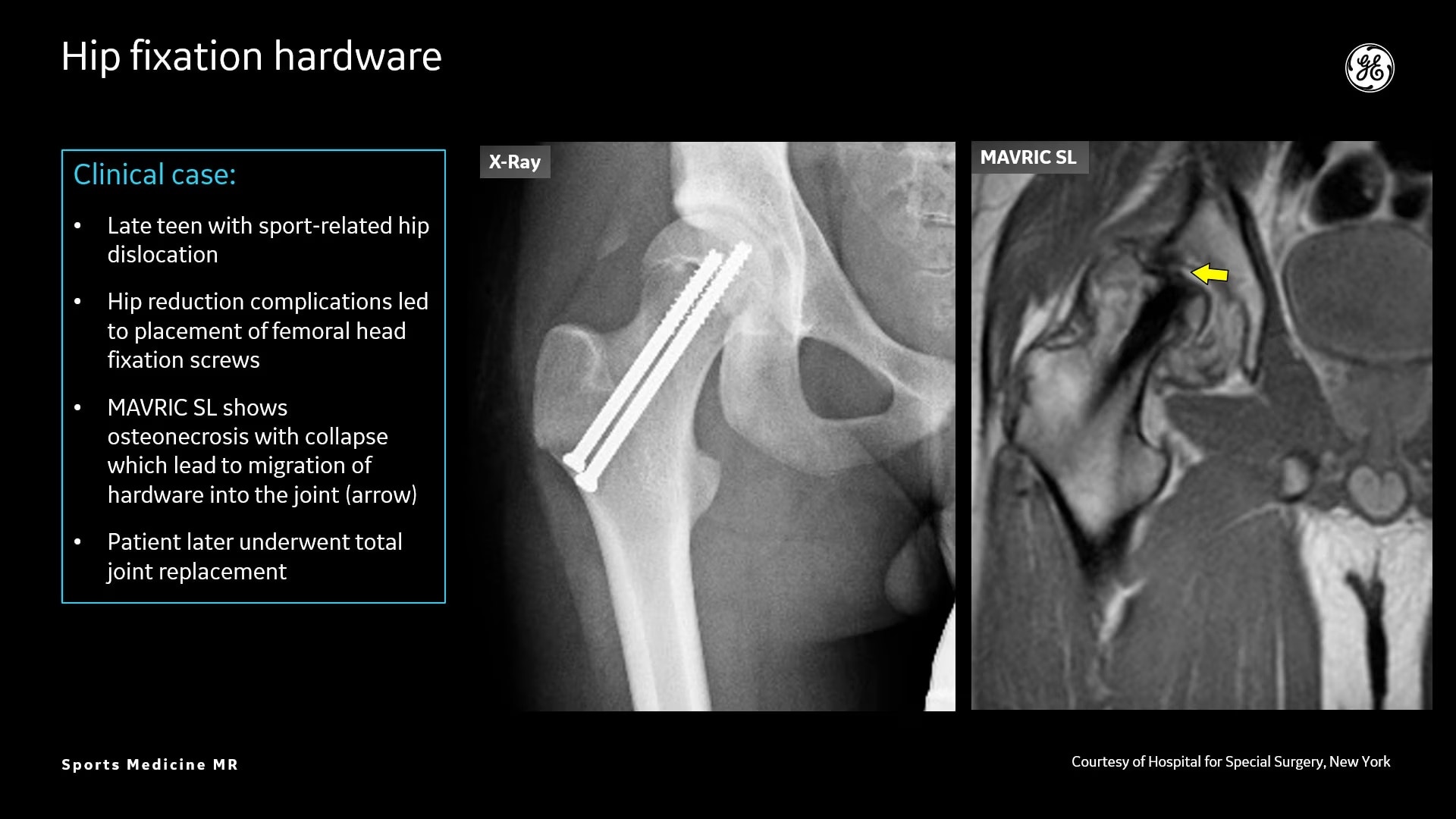
MR plays an important role in returning athletes to the field, particularly as it relates to determining healing of stress-related osseous and soft-tissue injuries. Continued advances in gradient performance, surface coils and pulse sequences make MR even more valuable in assessing suitability of return to play.
sports-medicine-mri-determine-return-ph-en
Concussion and mTBI Imaging
Using advanced quantitative MR imaging (qMRI) for sport-related brain injuries
MR imaging has been widely used to study the acute effects of sport-related concussion (SRC) on brain structure and function, as well as neurobiological recovery and return to play after SRC*.
A growing number of studies have demonstrated acute alterations in measures of white matter microstructural integrity, cerebral blood flow and brain functional connectivity after SRC that are not visualized using conventional CT or routine MR.
sports-medicine-concussion-and-mtbi-ci-en
Osseous and Soft-Tissue Injuries
MR bone imaging technology to help diagnose an athlete’s injury
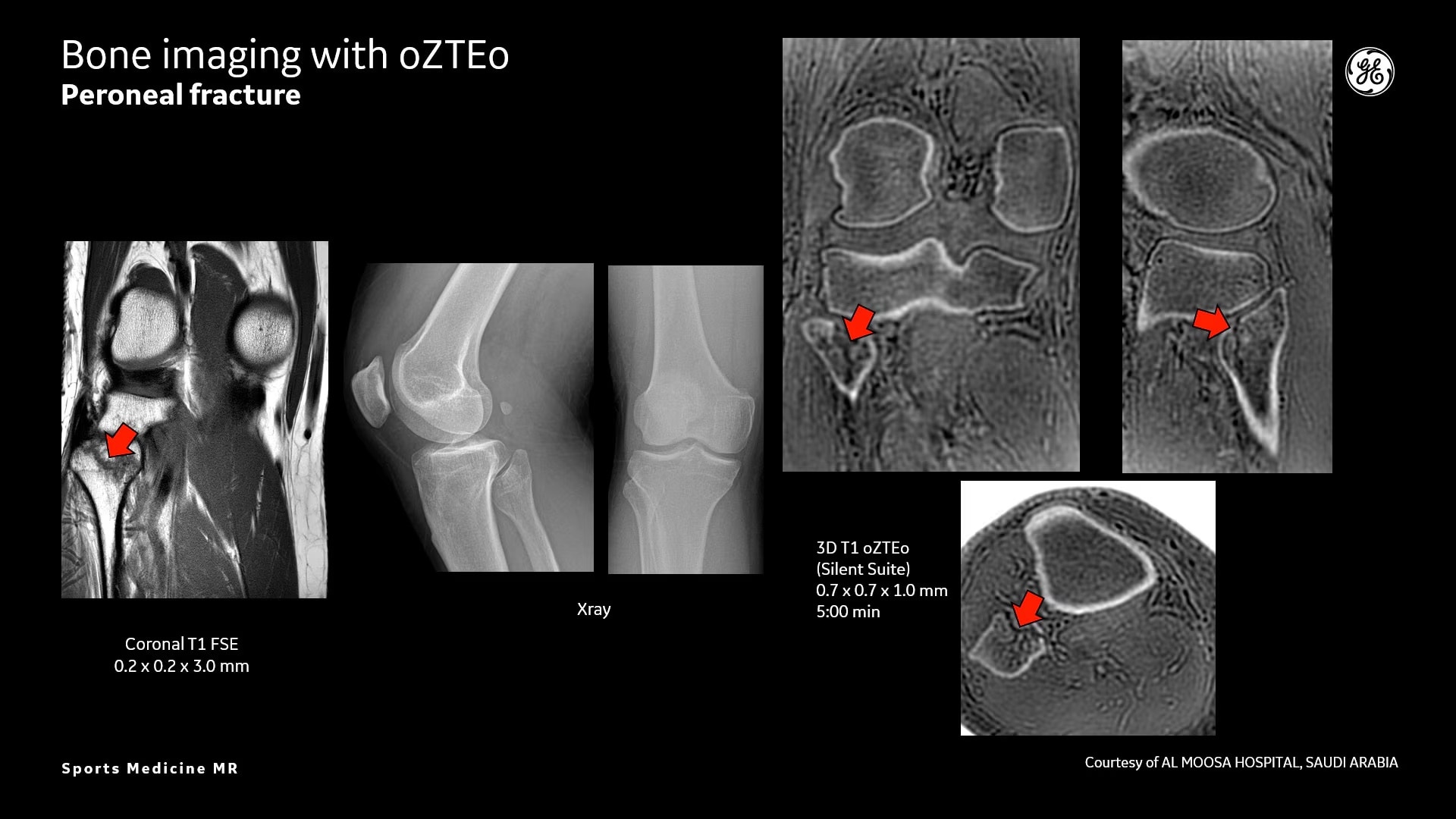
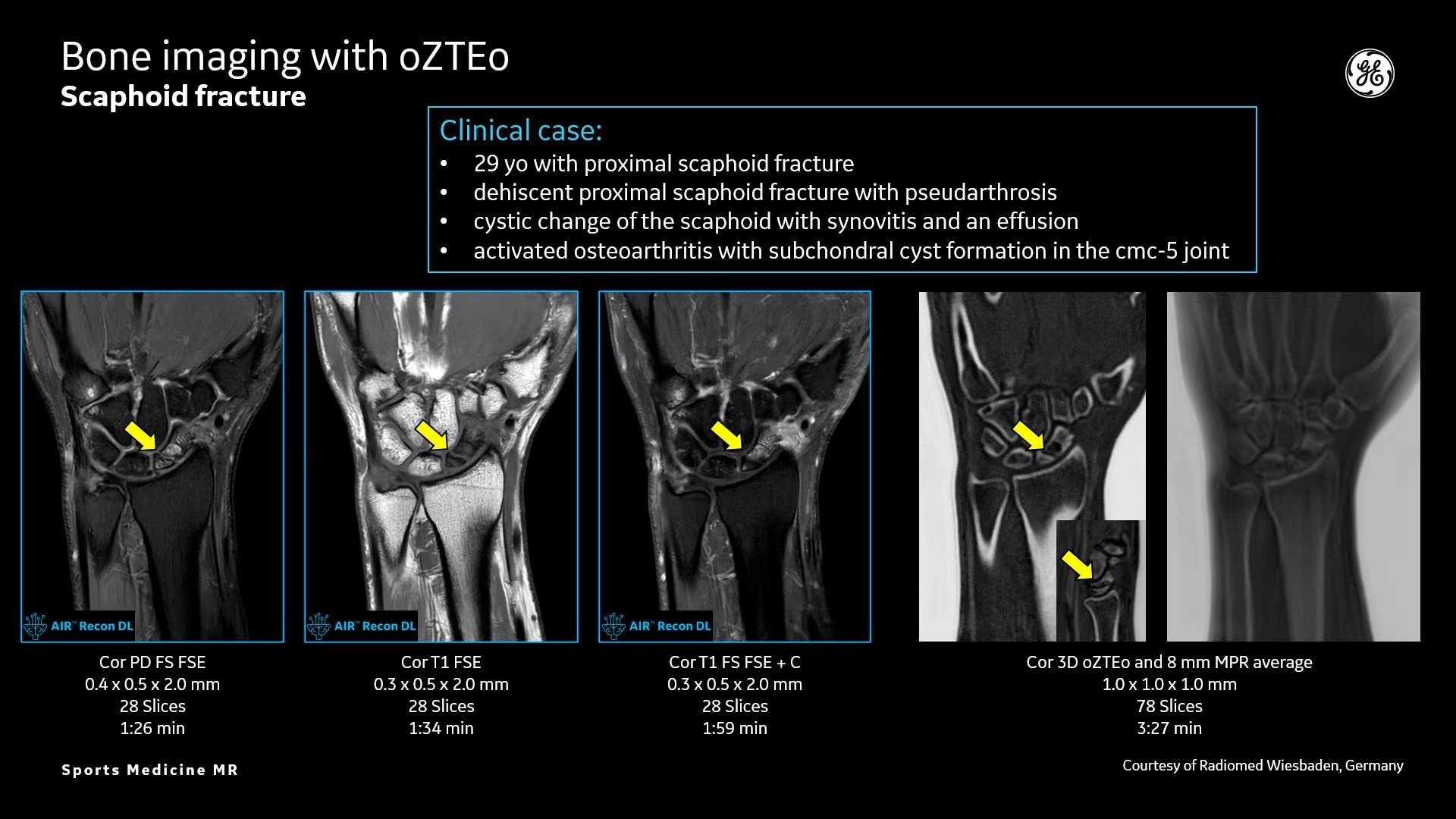
MR lacks ionizing radiation, and is well-suited for longitudinal evaluation of injury in adolescent athletes. The recent introduction of the three dimensional zero-TE (oZTEo) application provides exceptional bone contrast and, like CT, can be reformatted into any arbitrary plane.
sports-medicine-osseous-and-soft-tissue-injuries-ph-en
Deep-Learning MR Image Reconstruction Algorithm
High spatial resolution imaging
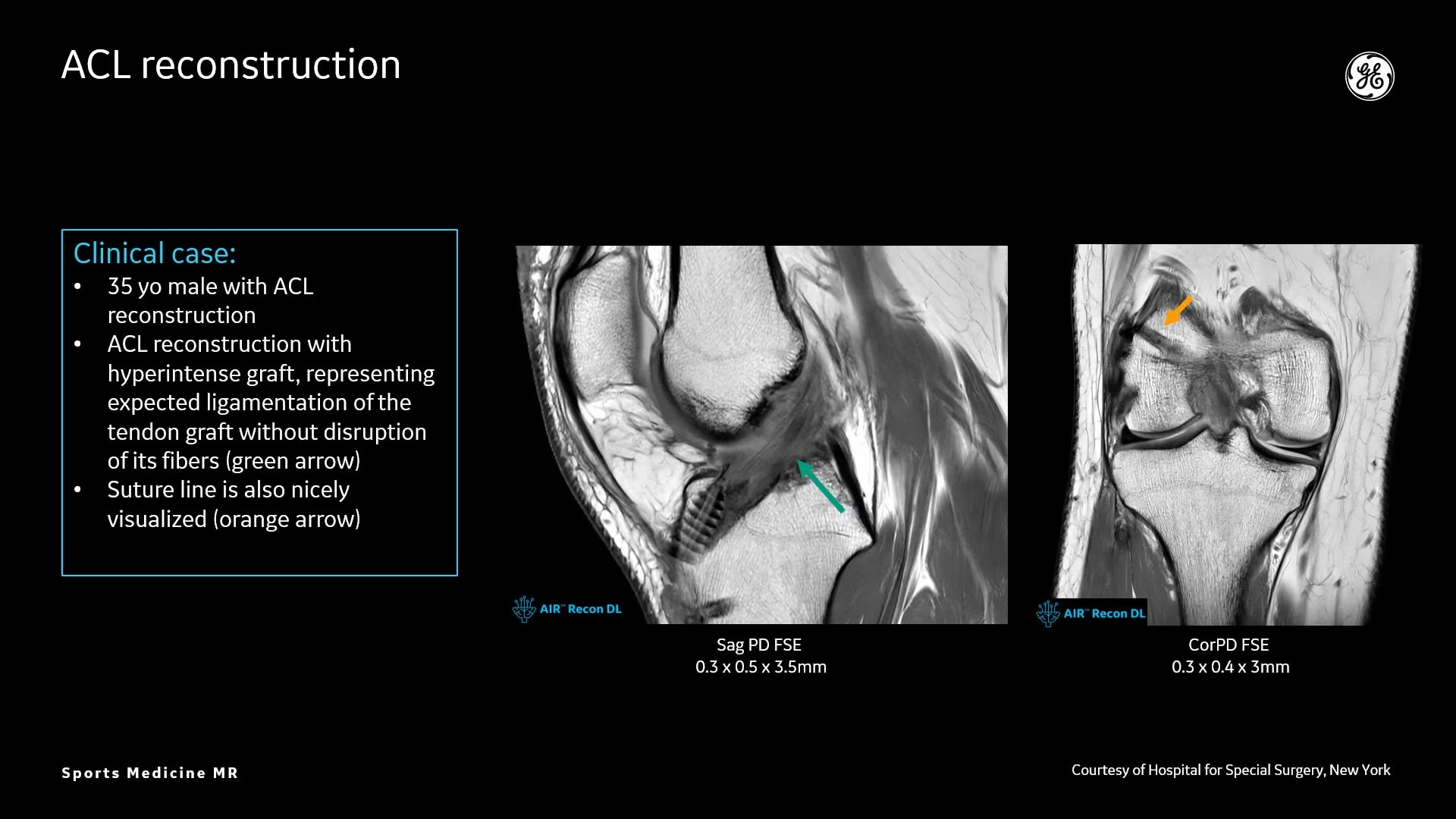
AIR™ Recon DL provides high-resolution images with increased SNR at markedly reduced scan times. This technology optimizes the depiction of even small injuries, such as meniscal, labral and ligament tears. The reduction in scan times increases flexibility for individually tailored MR protocols with an additional oZTEo sequence for detailed fracture assessment.
sports-medicine-high-spatial-resolution-ph-en

Discover advanced MR technologies for sports medicine

The benefits of MR have one central theme: leveraging advanced technology toward more objective biomarkers of injury and recovery. Discover the many advanced MR technologies available today for sports medicine.

PET/MR for identifying pain generation

Scientists and clinicians at Stanford University are attempting to develop better approaches to identify pain generators by employing techniques in clinical molecular imaging using PET/MR.
sports-medicine-msk-radiology-FeatureCardFull-1-ci-en

Multimodal neuroimaging to identify injury risk

Emory Sports Performance and Research Center discover neural signatures related to ACL injury and ACL injury risk biomechanics.
sports-medicine-msk-radiology-FeatureCardHalf-2-ci-en

Delivering a comprehensive knee assessment in athletes

Clínica CEMTRO’s study of a complex knee injury and the use of oZTEo and AIR™ Recon DL.
sports-medicine-msk-radiology-FeatureCardHalf-2-ci-en copy


*McCrea M, Meier T, Huber D, et al. Role of advanced neuroimaging, fluid biomarkers and genetic testing in the assessment of sport-related concussion: a systematic review. Br J Sports Med. 2017 Jun;51(12):919–929. doi:10.1136/bjsports-2016-097447.


JB22317XX December 2022

Learn more about MRI technology for Sports Medicine

Contact us

We're ready to support you in your moments that matter.

We’re sorry, a problem occurred with the form. Please try again.
Thank you for your inquiry.

We will be in touch soon.

Something went wrong

We will check and get back.