• Change country/language

    Looks like you’re in {} — you’re on the {} site.

    Cancel

    Country and language selected

    You are being redirected to the {} site. Products and services availability vary by country. Do you wish to continue?

    Continue
    Cancel

The Adequacy of Anaesthesia* (AoA) concept helps clinicians deliver an individually tailored anaesthesia and may help in their goal to improve patients' outcomes, it’s made up of parameters including EntropyTM, Neuromuscular Transmission(NMT) and Surgical Pleth Index (SPI)


Adequacy of Anaesthesia (AoA) is a concept made up of various parameters to help clinicians assess patients' individual responses to the delivery of inhaled and intravenous hypnotics, opioids, and NMBAs during general anaesthesia.


Learn more about AoA perioperative outcomes.


The AoA concept was designed to address the different components required for general anaesthesia. Indeed, AoA parameters provide continuous non-invasive measurement of:


  • The state of the brain with SPECTRAL ENTROPY™
  • Patient's response to surgical stimuli and analgesic medications with SURGICAL PLETH INDEX (SPI)™
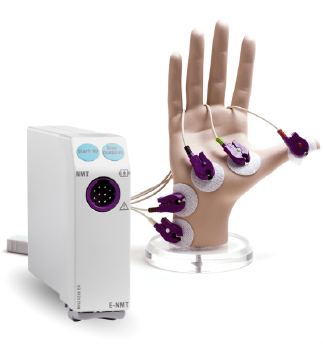
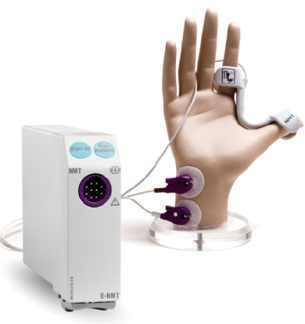
  • Muscle relaxation/recovery with NEUROMUSCULAR TRANSMISSION (NMT)

Perioperative outcomes

Optimize Postoperative Outcomes with Adequacy of Anaesthesia
 
  • Better control of Hemodynamic Stability inside and outside the operating setting
  • Support the reduction of the foremost roots of Pulmonary Complications


According to the latest multicentre study:


Outcomes observed in the AoA group vs control group:

  • Faster and more predictable wake up time in the OR
  • Faster awakening in PACU with faster patient discharge (17% faster)
  • Dose reduction, 8% less propofol consumption


One of the primary endpoint was to evaluate the achievement of a better hemodynamic stability thanks to AoA as outlined in previous publications. Unfortunately , the study did not confirm the primary endpoint . Reason is low adherence to given protocol.

Find the study HERE.

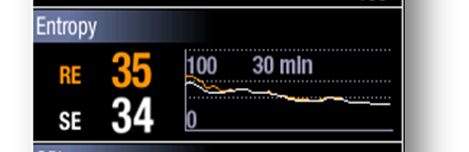
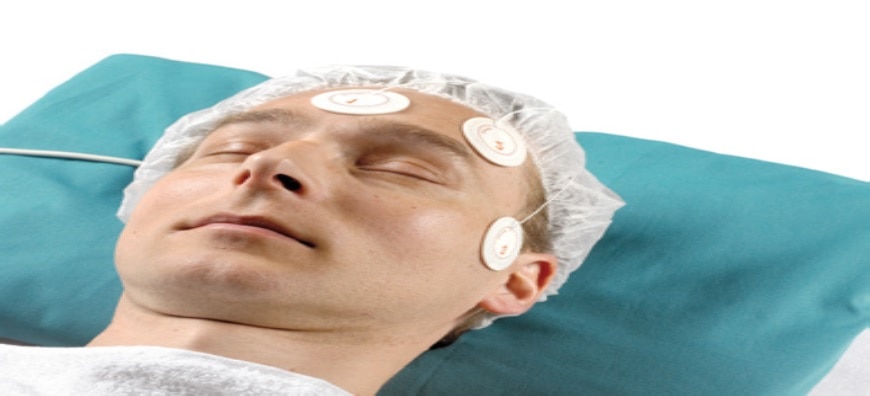
Entropy Monitoring


According to the NAP5 report, the incidence of Accidental Awareness during General Anaesthesia (AAGA) is ~1:8,000 when neuromuscular blockade was used and they are associated with psychological consequences for the patients experiencing them as 51% of episodes led to distress and 41% to longer-term psychological harm.1


In order to prevent such episodes, in particular when neuromuscular blockade is used or in patients who are judged to have high risk of AAGA for other reasons, the use of depth of anaesthesia monitoring, such as the Entropy monitoring, is recommended.2


For more publications, check the Entropy Publications Reference List and Entropy quick guide.


4. NAP5 Report, September 2014

5.Depth of anaesthesia monitors, NICE diagnostics guidance [DG6], November 2012

6.Vakkuri A. et al. Spectral Entropy Monitoring Is Associated with Reduced Propofol Use and Faster Emergence in Propofol-Nitrous Oxide-Alfentanil Anaesthesia Anesthesiology 2005; 103:274-9.

NMT Monitoring


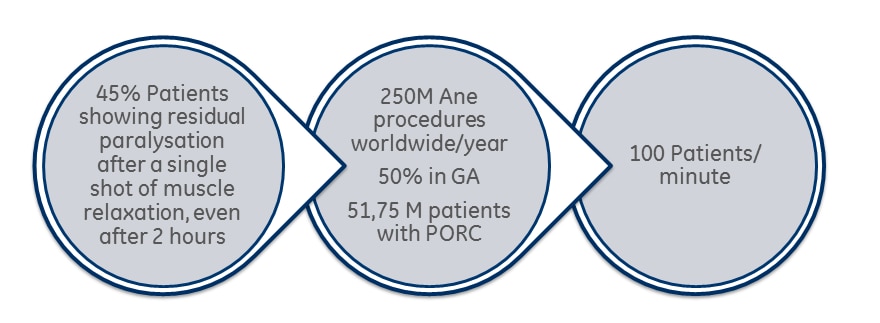
Post-Operative Residual Curarization (PORC) incidence in post-anaesthesia care units (PACU) is estimated to be up to 45% after a single shot muscle relaxation1. Considering that about 230 millions of patients undergo a major surgery each year, about 100 patients per minute would suffer from discomfort, reduced ventilation capacity, double vision and a 4-to-5 times increased aspiration risk (see Fig X). Such residual effects have clinical consequences and complications that can prolong hospitalization, particularly in vulnerable population such as obese patients.


According to Prof. Jan Paul Mulier, AZ Sint Jan Hospital, Belgium, NMT monitoring is key to prevent respiratory complications in obese patients: listen to Prof. Jan Paul Mulier explaining why Neuromuscular Transmission monitoring is essential to optimize muscle relaxation in this challenging population.


SPI Monitoring


Several studies reported fewer unwanted events, reduced opioid consumption and shorter emergence from anaesthesia, when opioid administration was based upon monitoring of the nociceptive-anti-nociceptive balance.1


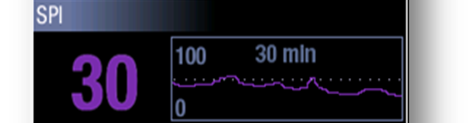
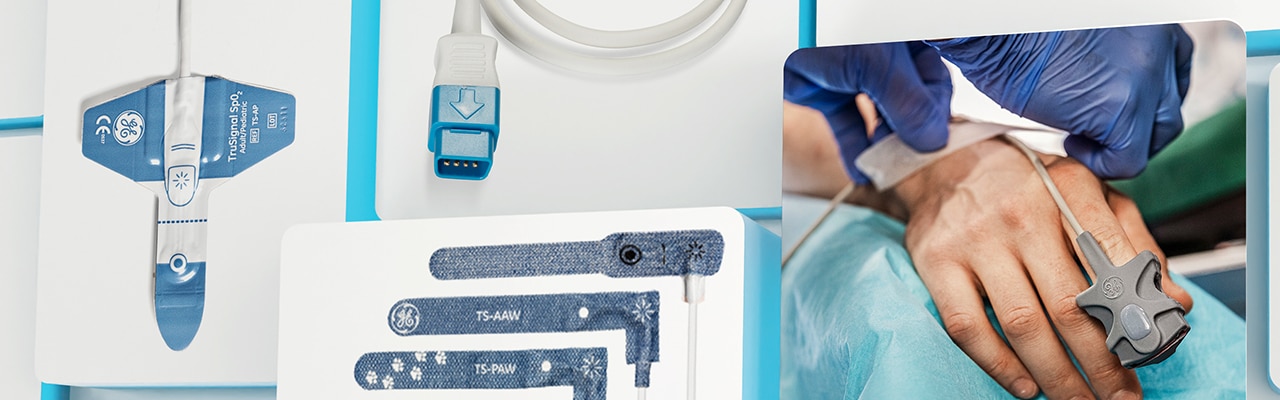
The Surgical Pleth Index (SPI)* is a parameter that reacts to haemodynamic responses caused by surgical stimuli and analgesic medications. SPI is an algorithm that uses two components of the GE photoplethysmographic signal when measured on GE SpO2 finger sensors only.


By observing the SPI value and trend, clinicians can monitor real time adult patient's responses to surgical stimuli and analgesic medications therefore saving valuable time for optimization analgesia delivery.


The optimal SPI target has not been recommended yet as more studies need to prove the clinically relevant range of SPI measurements. However, in several studies, a range of [20; 50] has been considered for guiding opioids titration.2,3


Published literature suggests that SPI-guided anaesthesia may result in lower remifentanil consumption, more stable haemodynamics and lower incidence of unwanted events.2,4


Know more about how SPI works and its clinical benefits:


Check out NMT Accessories


1.Gruenewald and Ilies C. Monitoring the nociception-anti-nociception balance. Best Pract Res Clin Anaesthesiol. 2013 Jun;27(2):235-47. doi:10.1016/j.bpa.2013.06.007.
2.Chen et al.: Comparison of Surgical Stress Index-guided analgesia with standard clinical practice during routine general anaesthesia Anaesthesiology, V 112, No.5 2010.
3.Wennervirta et al. Surgical stress index as a measure of nociception/antinociception balance during general anaesthesia. Acta Anaesthesiol Scand 2008; 52: 1038-45
4.Bergmann I. and al. Surgical pleth index-guided remifentanil administration reduces remifentanil and propofol consumption and shortens recovery times in outpatient anaesthesia. BJA 110 (4): 622-8 (2013)

Have a question? We would love to hear from you.

JB00337AFG May 2023