
In ultrasound, efficiency is often equated with speed: shorter exam times, faster turnaround times, fewer clicks. But for lead sonographers managing daily operations and radiologists focused on reading efficiency, the most meaningful gains rarely come from moving faster. They come from reducing rework and variability by getting exams right the first time.
One of the most overlooked contributors to this kind of efficiency is shared expertise.
Where ultrasound efficiency quietly breaks down
Most ultrasound departments rely on a small group of highly experienced sonographers and radiologists to uphold quality, guide less experienced staff, and support uncommon or complex exams. That expertise exists, but it is frequently limited by physical constraints. A lead sonographer can only be in one room at a time. A radiologist often identifies an issue only after the patient has left. By then, the opportunity to correct or refine the exam has passed.
These gaps show up in subtle but persistent ways. Exams may arrive with missing views or inconsistent technique. Radiologists spend additional time interpreting around technical limitations or requesting follow-up. Sonographers are interrupted repeatedly to answer quick questions. Newer staff move more slowly, not because of inefficiency, but because of uncertainty.
Individually, these moments may seem minor. Collectively, they create friction that compounds across a day, a week, and an entire department.
Introducing VerisoundTM Collab
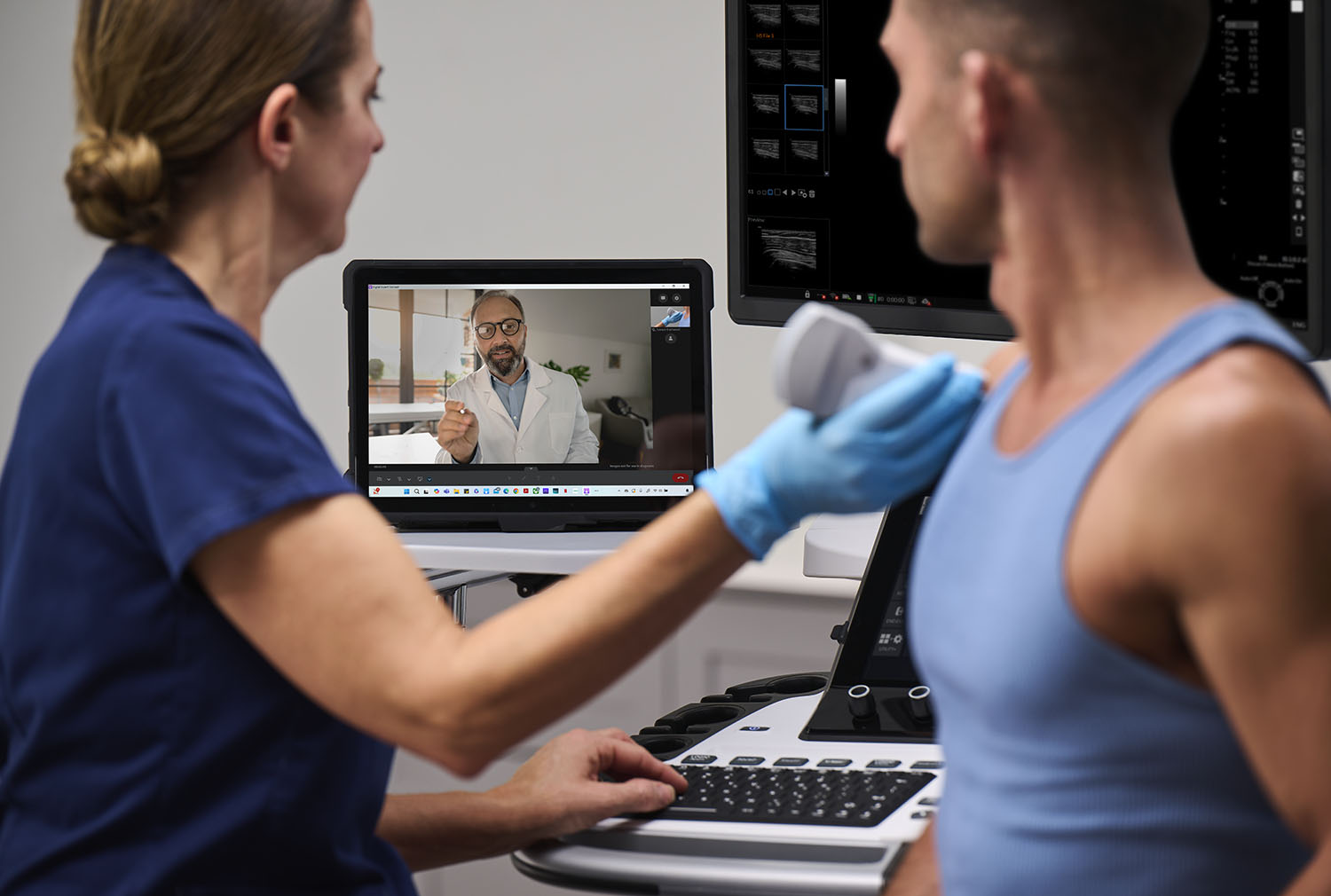
Verisound Collab* is a digital collaboration tool within the Verisound portfolio that enables live, virtual interaction between ultrasound users and remote colleagues. Using a mobile tablet or connected device alongside the ultrasound system, clinicians can initiate real-time system usage mentoring and engagement between ultrasound users wherever they are before, during or after an exam. Key capabilities include synchronous audio/video communication, live display sharing, and interactive tools for colleagues to observe and assist with console usage.
Shared expertise from the perspective of lead sonographers
For lead sonographers, efficiency is inseparable from consistency and confidence across the team. They are responsible not only for exam quality, but also for onboarding new hires, supporting complex studies, and maintaining standardized technique across sites and shifts.
In practice, this often means being pulled away from their own work to provide in-room guidance. While necessary, this model does not scale. It increases interruptions and limits how many people one expert can support at any given time.
When expertise can be shared virtually and in real time, support becomes more flexible. Guidance can be provided before an exam begins, during acquisition, or immediately afterward, without requiring physical presence. Questions can be addressed discreetly, and learning happens in context.
Over time, this approach helps reduce interruptions, accelerates skill development, and reinforces consistent technique across the department. Efficiency improves not because staff rush through exams, but because uncertainty is addressed early and confidently.
Why shared expertise matters to radiologists
Radiologists experience the downstream effects of acquisition variability every day. Reading efficiency depends heavily on the quality and completeness of the exam that arrives at their workstation. When required views are missing or technique is inconsistent, interpretation takes longer and often triggers additional communication or repeat imaging.
These delays rarely originate in the reading room. They originate earlier in the workflow, during image acquisition.
Shared expertise allows guidance to move upstream, closer to the point of care. When sonographers can receive real-time input on system use, studies are more likely to arrive ready for interpretation. This could lead to fewer callbacks, more predictable exam quality, and smoother reading sessions.
Moving quality improvement earlier in the workflow
Traditional quality improvement in ultrasound is largely retrospective. Images are reviewed after the exam, trends are identified, and feedback is delivered later. While important, this approach cannot change the exam that has already been completed.
Real-time collaboration with an expert makes quality improvement possible, earlier. Guidance delivered during or immediately around an exam allows corrections to be made when they matter most. It also turns each interaction into a learning opportunity, reinforcing best practices without requiring separate training sessions.
Rethinking what drives ultrasound efficiency
Ultrasound efficiency is often framed as a technology challenge or a staffing challenge. Perhaps it is also knowledge-flow challenge. Ask your team:
- How easily can expertise move across a department?
- How quickly can it reach the exam room?
- How consistently does it support staff with varying levels of experience?
Shared expertise offers a way to address these questions without adding physical burden to already stretched teams. By enabling real-time support and learning, it helps reduce variability, improve exam quality, and protect radiologist reading efficiency.
In an environment where workforce experience levels are changing and exam complexity continues to rise, shared expertise is becoming not just a benefit, but a practical driver of operational efficiency.
Complex care requires collaboration: Learn more about Verisound Collab
*Not for diagnostic use.
Verisound is a trademarks of GE HealthCare.
Product and features may not be available in all countries and regions. Full product technical specification is available upon request. Contact a GE HealthCare representative for more information.
JB36904XX
