
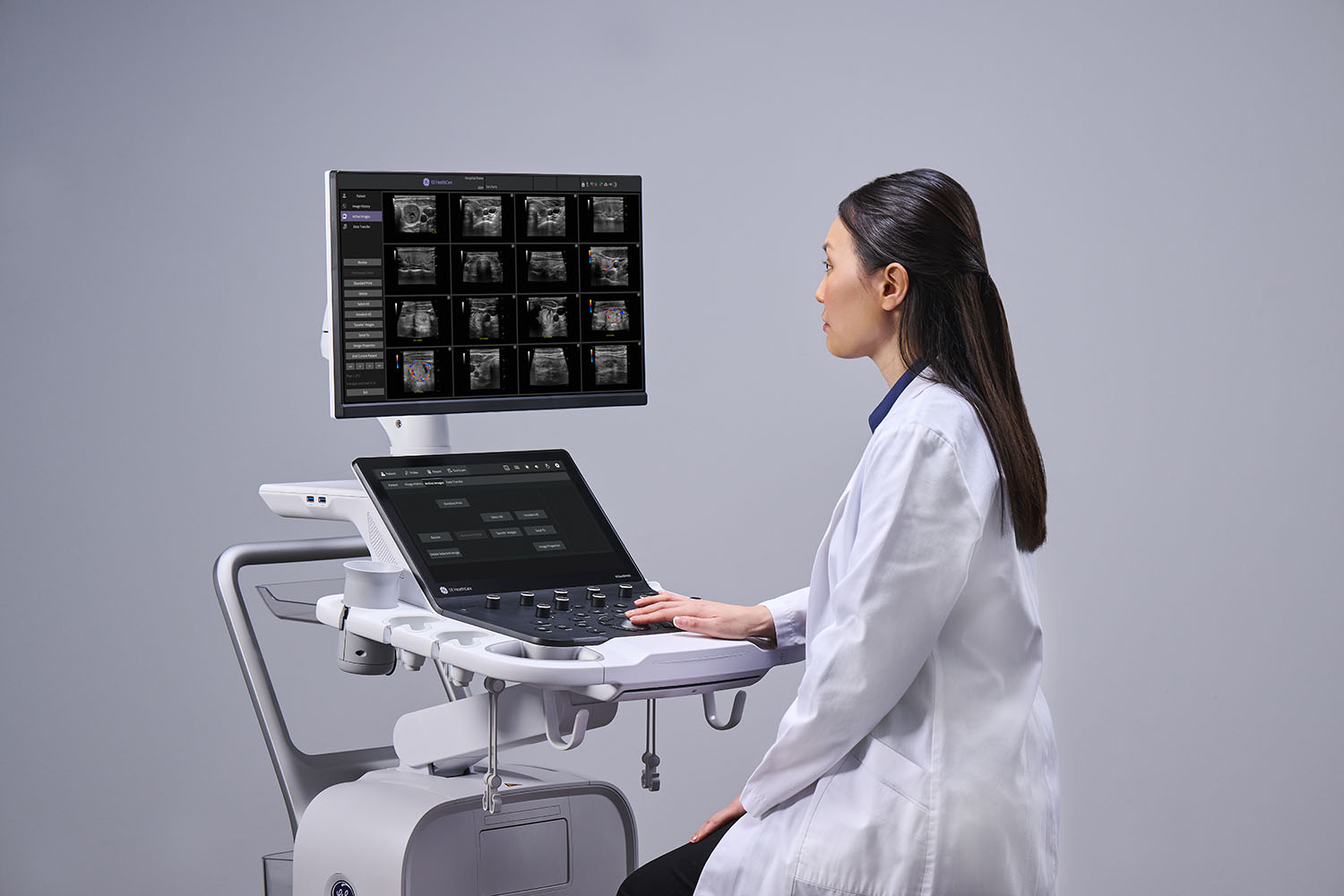
In a recent study in which physicians conveyed reservations about using ultrasound in their practices, 71 percent revealed that misdiagnosis is a top concern.1 This uncertainty often stems from blurry, obstructed, and unclear scans that leave patients and doctors with more questions than answers.
You know that image quality is a critical factor for an ultrasound device, especially for primary care providers, most of whom are new to ultrasound. It’s especially essential that maximum image clarity can be achieved with minimal manual effort. If you’re making a first-time investment in ultrasound, you need the peace of mind of knowing that it’s going to be a net positive not only for your patients but also for your practices; otherwise, you’d just keep referring patients to specialists rather than taking the leap into ultrasound yourself.
You also know that the ease with which optimal clarity can be obtained is almost as important as image clarity itself. What many may not know, however, is that not all systems are created equal in their promise and delivery of these two essential factors.
Let’s examine some of the core components of ultrasound image quality, the barriers that clinicians often face to achieving it, and the features that make it possible.
Image Clarity 101: Key Terms for New Ultrasound Users
To understand the importance of ultrasound image clarity, let’s first discuss some key vocabulary that can help new users in their learning journeys.
-
Plane - A two-dimensional cross-sectional view that varies based on orientation, allowing users to assess anatomical structures. Common imaging planes include longitudinal, transverse, and coronal.
-
Frequency - The number of cycles of vibration that occur in one second for sound waves with a frequency of 20,000 hertz (Hz) or higher.
-
Doppler - Technique that uses sound waves to measure blood flow in the body, or the Doppler effect, which is the change in frequency of sound waves as they move toward or away from a listener.
-
Echogenicity - The ability of tissue to reflect or transmit ultrasound waves or to bounce an echo.
-
Color Flow - An ultrasound technique that uses color to show the direction and speed of blood flow.
-
Transducer - Also called a probe, a transducer is a device that produces sound waves that bounce off body tissues and make echoes. The transducer also receives the echoes and sends them to a computer that uses them to create a picture called a sonogram.
-
ARDMS (The American Registry for Diagnostic Medical Sonography) - A non-profit organization that certifies medical professionals in ultrasound.
-
Focal Zone - The narrowest part of the ultrasound beam, where the scanner electronically focuses the energy. The focal zone is the region of the image with the best resolution.
-
B-Mode (Brightness Mode) - An ultrasound technique that creates two-dimensional images of internal organs and tissues. B-mode ultrasound images are made up of bright dots that represent ultrasound echoes, with the brightness of each dot indicating the strength of the echo signal.
-
Gain - The amplification of the returning ultrasound signal, which controls the overall brightness or darkness of the image. It's a uniform amplification, meaning it whitens the image as a whole rather than brightening the monitor.
Primary Barriers to Ultrasound Image Clarity
The main obstacles to optimal ultrasound image clarity result from natural patient biology, user experience level, and system quality. Some of the main barriers include, but are not limited to:
Tissue Thickness
An ultrasound’s beam is ultimately diminished (or attenuated) when it scans regions of the body with thicker tissue. This results in blurry scans, which can lead to inconclusive diagnoses. Higher levels of subcutaneous fat will make it harder for the probe to get a clear scan, whereas patients with fat predominantly intraperitoneal compartmental fat will not have much skin-to-organ thickness, which will enable doctors to obtain better image quality of the internal organs.2
Air and Gas Pockets
Air in the region being scanned can block or reduce the power of ultrasound waves, creating blurry and often incoherent images.3
Blurred Borders
In many cases, clinicians can have difficulty distinguishing between the organ tissue and an abnormality such as a growth or tumor.
User Error and Inexperience
Incorrect probe placement and machine calibration can also lead to blurry images. Improper probe positioning, including incorrect angle or pressure, can lead to distorted images and difficulty visualizing the desired anatomy. This is why it’s critically important, especially for new users, that your machine offers user-friendly and intuitive features to help guide you toward getting the best and most reliable scan every time.
Achieving Optimal Clarity with the Right Ultrasound System
As crucial as image clarity is, not all ultrasound systems are created equally equipped to offer it. You need and deserve a system that provides advanced and easy-to-use image guidance and optimization tools, as well as reliable training and education on how to get the most out of them. These features can help you overcome the above barriers and others to give you, your staff, and your patients confidence and assurance during the diagnostic process. They can help navigate thicker tissue, account for sporadic patient movements, and many other variables that have made it more difficult for less experienced to get the best image possible.
Seeing Things Clearer with Versana Ultrasound
GE HealthCare’s Versana family of ultrasound systems was designed to help users overcome the barriers that can get in the way of optimal image quality and diagnosis. Features like Scan Assistant, and Scan Coach augment GE HealthCare’s already superior ultrasound image quality help even less experienced users scan confidently for maximum diagnostic confidence.
Optimize images while scanning with Whizz clinical features, quickly improve Color Doppler with Whizz Color Flow and view scans in the image style that suits your preference with Whizz Easy Style. Additionally, VisionBoost Architecture, available on Versana Premier, helps you effortlessly deliver exceptional image quality and confidently diagnose a wide range of patient conditions.
Get the clarity and confidence you and your patients deserve with Versana Ultrasound.
Resources
-
Ginsburg, A. S., Liddy, Z., Khazaneh, P. T., May, S., & Pervaiz, F. (2023). A survey of barriers and facilitators to ultrasound use in low- and middle-income countries. Scientific Reports, 13(1). https://doi.org/10.1038/s41598-023-30454-w
-
Uppot, R. N. (2018). Technical challenges of imaging & image-guided interventions in obese patients. British Journal of Radiology, 20170931. https://doi.org/10.1259/bjr.20170931
-
M Henderson, J Dolan, Challenges, solutions, and advances in ultrasound-guided regional anaesthesia, BJA Education, Volume 16, Issue 11, November 2016, Pages 374–380, https://doi.org/10.1093/bjaed/mkw026
JB36414XX
