• Ülkeyi/dili değiştir

    {} bölgesinde bulunduğunuz görülüyor mdash; Şu anda {} sitesindesiniz.

    İptal

    Ülkeyi/dili değiştir

    {} sitesine yönlendiriliyorsunuz. Ürün ve hizmetlerin bulunabilirlik durumu ülkeye göre değişiklik göstermektedir. Devam etmek istiyor musunuz?

    Devam
    İptal

Indications and Use – Omnipaque™ (iohexol)

Intrathecal Administration – Adults: Omnipaque 180, 240, and 300 • Myelography (lumbar, thoracic, cervical, total columnar) • Computed tomography (CT) (myelography, cisternography, ventriculography) Pediatrics: Omnipaque 180 • Myelography (lumbar, thoracic, cervical, total columnar) • CT (myelography, cisternography) Intravascular Administration – Adults: Omnipaque 140 • Intra-arterial digital subtraction angiography of the head, neck, abdominal, renal and peripheral vessels. Omnipaque 240 • CT head imaging • Peripheral venography (phlebography). Omnipaque 300 • Aortography including studies of the aortic arch, abdominal aorta and its branches • CT head and body imaging • Cerebral arteriography • Peripheral venography (phlebography) • Peripheral arteriography • Excretory urography. Omnipaque 350 • Angiocardiography (ventriculography, selective coronary arteriography) • Aortography, including studies of the aortic root, aortic arch, ascending aorta, abdominal aorta and its branches • CT head and body imaging • Intravenous digital subtraction angiography of the head, neck, abdominal, renal and peripheral vessels • Peripheral arteriography • Excretory urography. Pediatrics: Omnipaque 240 • CT head and body imaging. Omnipaque 300 • Angiocardiography (ventriculography) • Excretory urography • CT head and body imaging. Omnipaque 350 • Angiocardiography (ventriculography, pulmonary arteriography, venography, and studies of the collateral arteries) • Aortography, including the aortic root, aortic arch, ascending and descending aorta. Oral or Rectal Administration – Adults: Omnipaque 350 • Oral radiographic examination of the gastrointestinal tract. Pediatrics: Omnipaque 180, 240, and 300 • Oral and rectal radiographic examination of the gastrointestinal tract. Oral administration in conjunction with intravenous administration: Diluted Omnipaque Injection – Adults: Omnipaque 240, 300, and 350 diluted and administered orally in conjunction with Omnipaque 300 administered intravenously • CT of the abdomen. Pediatrics: Omnipaque 240, 300, and 350 diluted and administered orally in conjunction with Omnipaque 240 or Omnipaque 300 administered intravenously • CT of the abdomen. Omnipaque Oral Solution – Adults: Omnipaque Oral Solutions 9 and 12 administered orally in conjunction with Omnipaque 300 administered intravenously • CT of the abdomen. Pediatrics: Omnipaque Oral Solutions 9 and 12 administered orally in conjunction with Omnipaque 240 or Omnipaque 300 administered intravenously • CT of the abdomen. Intra-articular Administration – Adults: Omnipaque 240, 300, and 350 • Arthrography. Body Cavity Administration – Adults: Omnipaque 240 • Endoscopic retrograde pancreatography (ERP) and endoscopic retrograde cholangiopancreatography (ERCP) • Herniography • Hysterosalpingography. Omnipaque 300 • Hysterosalpingography. Pediatrics: Omnipaque 240, 300, and 350 diluted • Voiding cystourethrography (VCU).


CONTRAINDICATIONS: Omnipaque 140 and Omnipaque 350 are contraindicated for intrathecal use. Omnipaque Oral Solutions 9 and 12 are contraindicated for parenteral administration.


Prior to Omnipaque administration, please read the full Prescribing Information including Boxed Warning for Omnipaque. Also read the full Prescribing Information for Omnipaque Imaging Bulk Package and Omnipaque Pharmacy Bulk Package.
IMPORTANT SAFETY INFORMATION

WARNING: RISKS WITH INADVERTENT

INTRATHECAL ADMINISTRATION OF

Omnipaque Injections 140 and 350 mgI/mL


See full Prescribing Information for complete Boxed Warning.


Omnipaque Injections 140 and 350 are contraindicated for intrathecal use. Inadvertent intrathecal administration may cause death, convulsions/seizures, cerebral hemorrhage, coma, paralysis, arachnoiditis, acute renal failure, cardiac arrest, rhabdomyolysis, hyperthermia, and brain edema (4, 5.1).


WARNINGS AND PRECAUTIONS Risks Associated With Inadvertent Intrathecal Administration: Omnipaque Injections 140 and 350 are contraindicated for intrathecal use. Inadvertent intrathecal administration can cause death, convulsions/seizures, cerebral hemorrhage, coma, paralysis, arachnoiditis, acute renal failure, cardiac arrest, rhabdomyolysis, hyperthermia, and brain edema. Risks Associated With Inadvertent Parenteral Administration of Omnipaque Oral Solution: Omnipaque Oral Solutions 9 and 12 are contraindicated for parenteral administration. Adverse reactions such as hemolysis may occur if administered intravascularly. Do not administer Omnipaque Oral Solutions 9 and 12 parenterally. Hypersensitivity Reactions: Omnipaque can cause life-threatening or fatal hypersensitivity reactions, including anaphylaxis. Manifestations include respiratory arrest, laryngospasm, bronchospasm, angioedema, and shock. Most severe reactions develop shortly after the start of the injection (within three minutes), but reactions can occur up to hours later. There is an increased risk in patients with a history of a previous reaction to contrast agents and known allergies (ie, bronchial asthma, drug, or food allergies) or other hypersensitivities. Premedication with antihistamines or corticosteroids does not prevent serious life-threatening reactions but may reduce both their incidence and severity. Obtain a history of allergy, hypersensitivity, or hypersensitivity reactions to iodinated contrast agents, and always have emergency resuscitation equipment and trained personnel available prior to Omnipaque administration. Monitor all patients for hypersensitivity reactions. Contrast-Induced Acute Kidney Injury: Acute kidney injury, including renal failure, may occur after parenteral administration of Omnipaque. Risk factors include preexistng renal impairment, dehydration, diabetes mellitus, congestive heart failure, advanced vascular disease, elderly age, concomitant use of nephrotoxic or diuretic medications, multiple myeloma/paraproteinaceous diseases, and repetitive and/or large doses of an iodinated contrast agent. Use the lowest necessary dose of Omnipaque in patients with renal impairment. Adequately hydrate patients prior to and following parenteral administration of Omnipaque. Do not use laxatives, diuretics, or preparatory dehydration prior to Omnipaque administration.


Bring the potential benefits of Omnipaque™ (iohexol) to your practice


Omnipaque can be a solution for many of your contrast needs, providing you with:

  • Well-established safety profile and demonstrated efficacy 1
  • Extensive range of environmentally friendly packaging options 2
  • Various support services


Clinical Experience and Versatility

  • Introduced in 1986 - More than 30 years of clinical experience 1 - Published in thousands of trials and clinical studies
    - Approved for use in more than 100 countries 1
  • The most indications of any low-osmolar contrast medium 2 - Indication for oral administration 2 , in conjuction with IV, for CT of the abdomen 2 - Indication for hysterosalpingography 2 - Intrathecal indication for myelography use 2 - Indications for the Cath Lab 2


Packaging

  • +PLUS PAKTM polymer bottle for enhanced workplace safety and efficiency
    • The landmark design of +PLUSPAK streamlines processes one bottle at a time. Labels are easy to read from any angle and the built-in hanger is simple to use. Medical supply has never been more efficient.
    • GE Healthcare’s easy-to-open, metal-free, twist-off polypropylene cap avoids cuts from metal crimps. Our packaging was designed to be safer than glass.
    • Our pharmaceutical-grade polymer bottle won’t shatter when dropped, reducing the risk of injury from broken glass.


Potential Savings

  • 340B Drug Pricing Program
  • +PLUS PAK polymer bottles - Upfront price and waste disposal costs
  • Competitive industry pricing - One-source solution with GE Healthcare
  • Direct or through wholesaler


Support

References

  1.  Data on file. GE Healthcare; 2011.
  2.  Omnipaque [prescribing information]. Marlborough, MA: GE Healthcare; 2018.

Taste After Taste: Omnipaque Oral Solution in Conjunction with IV

See Indications and Important Safety Information, including Boxed Warning, about Omnipaque at the bottom of this page. Please also read the full Prescribing Information.


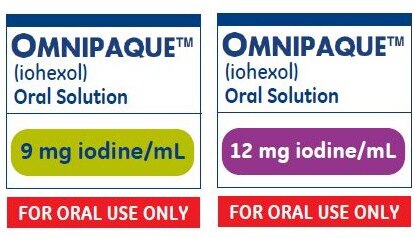
Omnipaque Oral Solution: Prediluted solution available in two iodine concentrations approved for oral use in conjunction with Omnipaque Injection administered intravenously for computed tomography of the abdomen.

  • Ready-to-drink formulation
  • Consistent and accurate dose
  • Easy to administer for staff and patients
  • Neutral taste/palatability*

* 149 patients ingested Omnipaque Injection diluted to 9 mgI/mL. Patients rated the taste on average at 0.86 ± 1.09. (Scores ranged from -2: dislike very much to +2: like very much.)1 In another study, 25 patients were given 100 mL of Omnipaque 350 prior to radiographic examination of the GI tract. The majority of patients (18) rated Omnipaque as tasting neutral (12) or good (6).2


References:

  1. McNamara MM, Lockhart ME, Fineberg NS, Berland LL. Oral contrast media for body CT: comparison of diatrizoate sodium and iohexol for patient acceptance and bowel opacification. J Roentgenol. 2010;195:1137- 1141.
  2. Stordahl A, Laerum F, Gjølberg T, Enge I. Water-soluble contrast media in radiography of small bowel obstruction. Comparison of ionic and non-ionic contrast media. Acta Radiol. 1988;29:53-56.


Procedure After Procedure: How +PLUSPAK™ polymer bottle helps you and your department

See Indications and Important Safety Information, including Boxed Warning, about Omnipaque at the bottom of this page. Please also read the full Prescribing Information.

+PLUSPAK is GE Healthcare’s innovative polymer packaging for contrast media solutions. It was designed with workplace safety, efficiency, and convenience in mind.


Contact us to find out more about product availability for +PLUSPAK.


+PLUSPAK packaging enhances workplace safety by reducing the risk of sharps injuries.


Injuries associated with glass bottles make up an estimated 16% of sharps injuries in healthcare settings. Other sharp items, such as the edges of metal bottle seals, cause an additional 15% of injuries1


  • No more broken glass bottles
  • Our pharmaceutical-grade polymer bottle won’t shatter when dropped, reducing the risk of injury from broken glass
  • No more ring-pull injuries
  • GE Healthcare’s easy-to-open, metal-free, twist-off polypropylene cap avoids cuts from metal crimps. Our packaging is designed to be just plain safer than glass


Reference:
1. Marshall G. Radiography 2008;14:128-34.

OmnipaquePLUSPAKgroupA530pxCMYK

Taste After Taste: Delivery of Oral Omnipaque™

See Indications and Important Safety Information, including Boxed Warning, about Omnipaque at the bottom of this page. Please also read the full Prescribing Information.
Omnipaquevideo-th

Omnipaque for Oral Use, in conjunction with IV Omnipaque, for CT of the abdomen

SEE VIDEO: Opacification of the gastrointestinal tract using Omnipaque: A clinical case study


Neutral taste for your patients*

  • A majority of patients rated Omnipaque as tasting neutral (12) or good (6)1
  • Omnipaque received a better taste preference score than did MD-Gastroview® (diatrizoate meglumine and diatrizoate sodium solution USP) (P<0.001)2

Omnipaque for Oral Use


Omnipaque - A nonionic, low-osmolar contrast medium indicated for oral use in both adults and children3

  • Omnipaque is an oral contrast medium with a neutral taste that even children may drink4
  • A majority of patients rated Omnipaque as tasting neutral (12) or good (6)1
  • In a study of pediatric patients by Smevik and Westvik, 98% of children drank the entire dose5
  • Patients in an abdominal computerized tomography study drank the entire prescribed amount and said they would do so again, if necessary6
  • Omnipaque 350 mgI/ml was used in radiographic follow-through examination of the small bowel


*149 patients ingested Omnipaque injection diluted to 9 mg I/mL.1 Patients rated the taste on average at 0.86 ± 1.09. (Scores ranged from -2: dislike very much to +2: like very much.)2 In another study, 25 patients were given 100 mL of Omnipaque 350 prior to radiographic examination of the GI tract. A majority of patients rated Omnipaque as tasting neutral (12) or good (6).1


Important Safety Information About Omnipaque™ (iohexol)


CONTRAINDICATIONS:  Omnipaque 140 and Omnipaque 350 are contraindicated for intrathecal use. Omnipaque Oral Solutions 9 and 12 are contraindicated for parenteral administration.


WARNINGS AND PRECAUTIONS – Risks Associated With Inadvertent Intrathecal Administration: Omnipaque Injections 140 and 350 are contraindicated for intrathecal use. Inadvertent intrathecal administration can cause death, convulsions/seizures, cerebral hemorrhage, coma, paralysis, arachnoiditis, acute renal failure, cardiac arrest, rhabdomyolysis, hyperthermia, and brain edema. Risks Associated With Inadvertent Parenteral Administration of Omnipaque Oral Solution: Omnipaque Oral Solutions 9 and 12 are contraindicated for parenteral administration. Adverse reactions such as hemolysis may occur if administered intravascularly. Do not administer Omnipaque Oral Solutions 9 and 12 parenterally. Hypersensitivity Reactions: Omnipaque can cause life-threatening or fatal hypersensitivity reactions, including anaphylaxis. Manifestations include respiratory arrest, laryngospasm, bronchospasm, angioedema, and shock. Most severe reactions develop shortly after the start of the injection (within three minutes), but reactions can occur up to hours later. There is an increased risk in patients with a history of a previous reaction to contrast agents and known allergies (ie, bronchial asthma, drug, or food allergies) or other hypersensitivities. Premedication with antihistamines or corticosteroids does not prevent serious life-threatening reactions but may reduce both their incidence and severity. Obtain a history of allergy, hypersensitivity, or hypersensitivity reactions to iodinated contrast agents, and always have emergency resuscitation equipment and trained personnel available prior to Omnipaque administration. Monitor all patients for hypersensitivity reactions. Contrast-Induced Acute Kidney Injury: Acute kidney injury, including renal failure, may occur after parenteral administration of Omnipaque. Risk factors include preexistng renal impairment, dehydration, diabetes mellitus, congestive heart failure, advanced vascular disease, elderly age, concomitant use of nephrotoxic or diuretic medications, multiple myeloma/paraproteinaceous diseases, and repetitive and/or large doses of an iodinated contrast agent. Use the lowest necessary dose of Omnipaque in patients with renal impairment. Adequately hydrate patients prior to and following parenteral administration of Omnipaque. Do not use laxatives, diuretics, or preparatory dehydration prior to Omnipaque administration.


Visualization


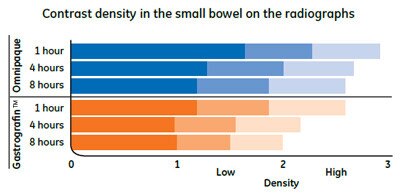
Omnipaque is an oral contrast medium that offers gastrointestinal visualization1,6


  • Omnipaque had a statistically significant, higher small-bowel density than GastrografinTM at one hour (P=0.007) and four hours (P=0.04) after ingestion1
  • Provides good visualization of the intestines and is approved for gastrointestinal use in infants and children7

Graph courtesy of Stordahl et al, 1998 - Acta Radial


References:
1. Stordahl A, Laerum F, Gjølberg T, Enge T. Water-soluble contrast media in radiography of small bowel obstruction: comparison of ionic and non-ionic contrast media. Acta Radiol. 1988;29:53-56.
2. McNamara MM, Lockhart ME, Fineberg NS, Berland LL. Oral contrast media for body CT: comparison of diatrizoate sodium and iohexol for patient acceptance and bowel opacification. Am J Roentgenol. 2010;195:1137-1141.
3. Omnipaque [prescribing information]. Marlborough, MA: GE Healthcare; 2018. 
4. Smevik B, Stake G. Omnipaque as a contrast medium for bowel opacification in abdominal CT in infants and children. In: Kaufmann HJ, ed. Contrast Media in Child Radiology. Basel, Switzerland: Karger; 1986:79-80.
5. Smevik B, Westvik J. Iohexol for contrast enhancement of bowel in pediatric abdominal CT. Acta Radiol. 1990;31:601-604.
6. Lönnemark M, Magnusson A. Oral contrast media in CT of the abdomen: iohexol of different concentrations as a gastrointestinal contrast medium. Acta Radiol. 1995;36: 396-398.
7. Stake G, Smevik B. Iohexol as contrast medium for the gastrointestinal tract in childhood. In: Kaufmann HJ, ed. Contrast Media in Child Radiology. Basel, Switzerland: Karger; 1986:107-109.


Reimbursement

See Indications and Important Safety Information, including Boxed Warning, about Omnipaque at the bottom of this page. Please also read the full Prescribing Information.
oduct-categories-contrast-media-omnipaque-sample page-medicare codes and payment rates.jpg

GE Healthcare Medical Diagnostics Reimbursement

GE Healthcare advocates for timely patient access to medically appropriate, high-quality imaging services, provided by knowledgeable and skilled providers of care. We recognize the significant impact that reimbursement policies can have on you and your practice, and we strive to provide accurate and reliable information to help you navigate the reimbursement process. 


Coding and Payment Information


Through the Hospital Outpatient Prospective Payment System (HOPPS), Medicare currently "packages" payment for contrast media agents into the payment for the associated procedure.


Contrast media is separately payable in physician offices and freestanding imaging centers. Payment is based on the average sales price (ASP) + 6%. ASP rates are adjusted quarterly and are based on the prior quarter's ASP data.


Physicians performing diagnostic imaging procedures using contrast media should report the appropriate HCPCS code for the product along with the appropriate CPT® code(s) for the procedure(s). Physicians should select codes based on the iodine concentration used in the procedure. The mL of contrast volume reported should be consistent with the mL of contrast given to complete the imaging study. The applicable codes for Omnipaque are noted in the above chart.


JB00043US September 2020